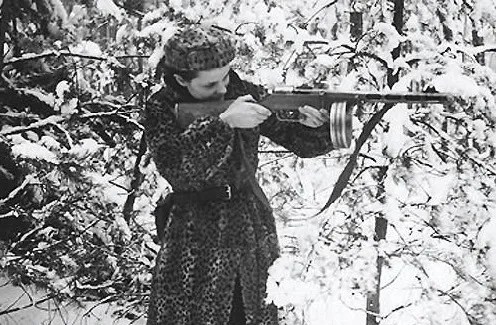
Valentine’s Day is tomorrow, or, as one of my faves, Liz Lemon, likes to remind everyone- Happy Anna Howard Shaw Day! (Anna was a famed American suffragette who was born on Feb. 14, so definitely worth celebrating!) So, in the spirit of strong women, I wanted to start off my first mini-series (I guess that’s the term?) about the badass women who fought Nazis.
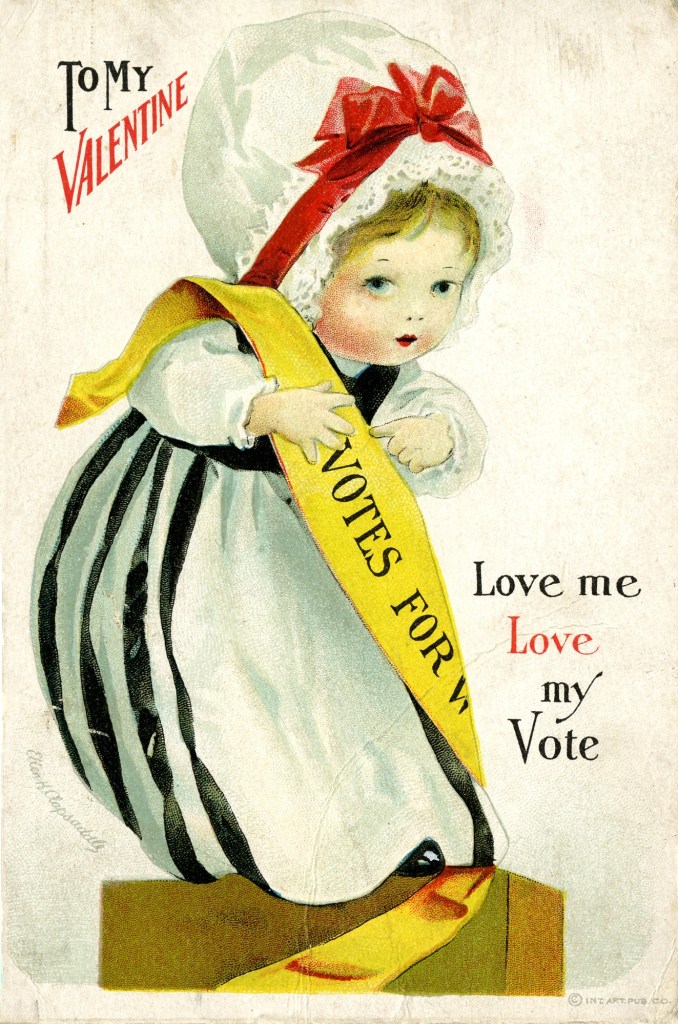
First though, since we’re on the topic, did you know that suffragettes actually had Valentine’s cards made to promote women’s suffrage? I love this.
Now, back to our main goal: learning about the incredible women who fought the Nazis!
When I first started writing my master’s thesis, I came across the story of a woman whose codename was Claude (no one in the resistance movements ever went by their real names, so that there was less chance of them being turned over to the Nazis or their collaborators- even under torture, your true identity couldn’t be told because no one knew it) early on in my research. Her story stuck with me and made me reevaluate my own perspectives on resistance and how society views those who fight against oppression and injustice in the world.
(Side note, if you’re ever feeling the crazy lure of some academic reading, my thesis is online- I’m pretty sure no one will ever read it with how long it is, but just throwing it out there in a not-so-humble-not-so-subtle brag.)
Anyways, here’s my brief synopsis of Claude’s story:
Picture this: The Nazis have officially invaded France, and France itself is split in two- the “free” part of France, run by the collaborationist Vichy regime, and the Nazi-occupied part of the country. Many of France’s men are away- they were either conscripted for the war effort or for the work force of the Germans, or they had escaped and gone underground into resistance networks. Resources in the cities especially were scarce, as most food and other supplies were being sent to the Germans on the front. (Those who lived in the countryside had a bit more options as many could grow their own food.)
The Nazis, however, had a luxurious lifestyle (at least when they were first occupying France. Obviously as the war progressed and they started to lose things changed) and flaunted it. They definitely did not lack for food or cigarettes, or anything else really. And these Germans definitely spent time out and about enjoying the French cities.
So here comes Claude, a beautiful French woman who (very intentionally) dressed up in her best (only) dress and went on a date with a member of the Gestapo. Dinner went exceptionally well, and, at a pre-determined time, Claude led this Nazi out of the restaurant and back to the car. They both got in the back seat, and this guy, thinking his night was about to have a lucky finish, made his move on her.
And you know what she did? She used this opportunity to shoot him and kill him. Queen, right? As soon as she murdered this guy, men from the resistance network she worked with came to get rid of the body. And the world became a little brighter.
This was the first of several stories I encountered where a woman legitimately seduced a Nazi and then killed him. (Now, generally I am a pacifist, and not about murdering other human beings. But Nazis we definitely do not need to defend here.) I was impressed, to say the least.
My takeaways from this:
Women can (and do) use the stereotypes and expectations society puts on them to their advantage if they want to. By intentionally playing on their sexuality, women were able to maneuver their way around the Nazis and participate in resistance activities I never thought possible. Of course, there were other ways women did this besides just their sexuality. Women also exploited the ideal image of a woman as a mother and wife, as well as the (totally ridiculous) idea of women being apolitical and less intelligent.
Women (and men, too) operated in an incredibly judgmental society. Not only were there risks associated with being in the resistance and taking on these types of activities, but there was also a LOT of resentment towards women who fraternized with the Nazis during occupation in France. So, for those who were not in the know, these women would appear to others to be engaging happily with the enemy, and that itself had repercussions, especially after the war.
In France, after the war women who had been involved with the Germans had their heads publicly shaved and were paraded around their towns in an act of terrible humiliation. I can’t help but wonder if any of those women were actually in the resistance, but had no one to vouch for them to prove what they were up to, and thus looked like they were just benefitting from their interactions with the Germans. (Fun fact, women were accused of “horizontal collaboration” if they were too close to the Germans. But of course, by no means were all women who were accused of that in relationships with Germans. Thanks society for that reminder of the judgment women face all the time.)
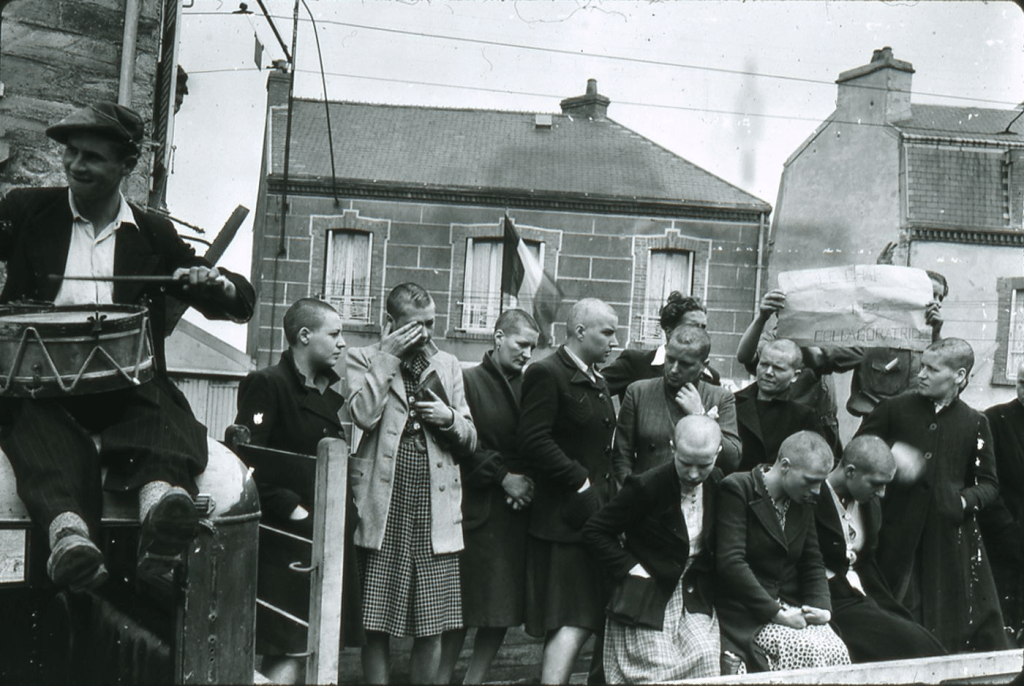
As a side note here, it is really hard to judge some of these women for their choices. Of course, collaboration with the Nazis is not cool, but there was a lot of stuff happening. Many women who did interact with the Germans in any capacity did so for their own survival, as the Nazis had key supplies and food that most women did not have access to because of the war. At the same time, there were many who went without those things so they could be part of the resistance. So, human choice is key, and that’s applicable today as well. Make good choices, be good humans!
Alright, back to these amazing strong badass women. (I think too often when we learn about resistance, we hear about men. And so I will ramble on always about the women who were also a part of this.) Women manipulated the Nazis in so many ways, it’s actually incredible. They would flirt with them to easily get past checkpoints with their bags full of stuff for the resistance. They walked around in plain sight with fake pregnancy pouches or empty baby strollers that held radios, documents, and other important resistance supplies. And, of course, they also acted as armed members of partisan resistance groups.
One woman named Lucie Aubrac even orchestrated the escape of her husband from the Gestapo by setting up a meeting with a Gestapo chief named Klaus Barbie who notoriously personally tortured victims of the regime (he became known as the “Butcher of Lyon”).
Both her and her husband were involved in the French resistance as part of a communist group. When her husband Raymond was arrested, she knew she had to get him out of the hands of the Gestapo so he would live. She was pregnant at the time, so she dressed up in her best dress, a fancy hat, and lipstick (you know, the Germans in some ways made it easy for these French women to seduce these guys. In Germany, women were not supposed to wear makeup or anything that may sexualize them, despite the state obsessively promoting the idea that their sole role was to be mothers and wives.)
There was a French law that allowed couples to be wed if one of them was about to die. So Lucie, looking her best and pregnant, went to the office of Barbie and broke down to him, stating that she was pregnant by her fiance whom she recently met and knew as “Ermelin.” She said she had no idea that he was involved in the resistance, and that it must have been a mistake- that he was somehow caught up in the raid because he was at the wrong place at the wrong time. When Barbie told her that her fiance was going to be executed, she begged him to please let them get married first, so that her baby would be legitimate and she wouldn’t be judged harshly by society. (Because, clearly, in a state where mass murder is the norm, one’s honor is definitely determined by getting pregnant outside of wedlock.)
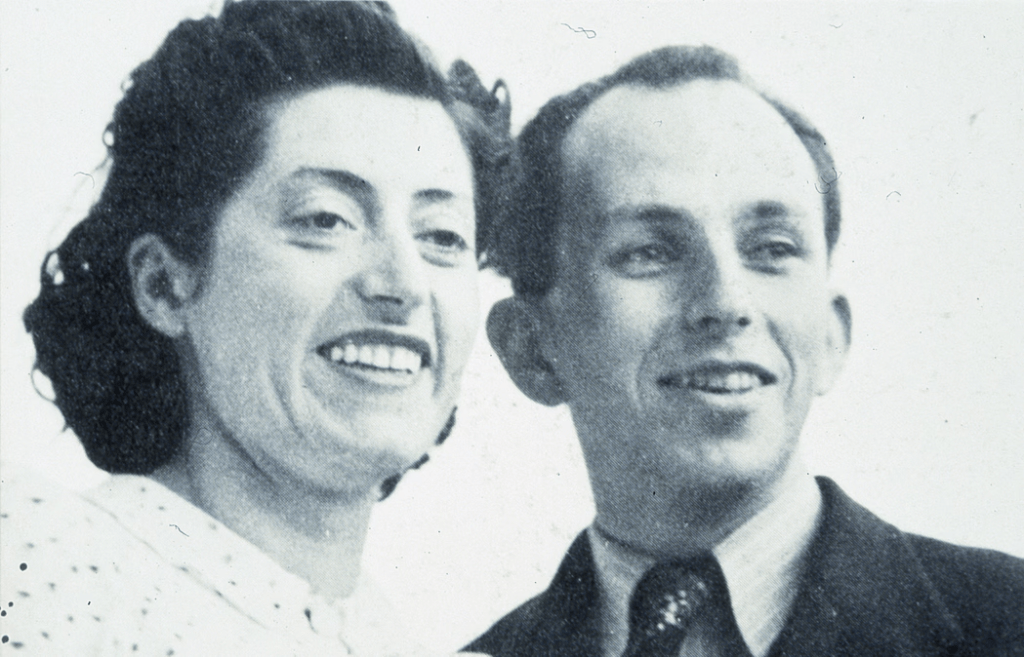
And so, by playing on the idea that she was a helpless woman in a terrible situation, that her very reputation was at stake, as well as that of her unborn child, she convinced Barbie to allow them to get married.
When her husband was getting transported back to the prison after their “wedding,” the van was attacked by the resistance fighters who killed the guards and freed Raymond. The two had to go into hiding in the UK until the end of the war.
Lucie was able to utilize the expectations of women to manipulate the actual “butcher of Lyon” to save her husband Raymond. She’s the hero we never knew we needed. (And she was even turned into a comic book hero!)
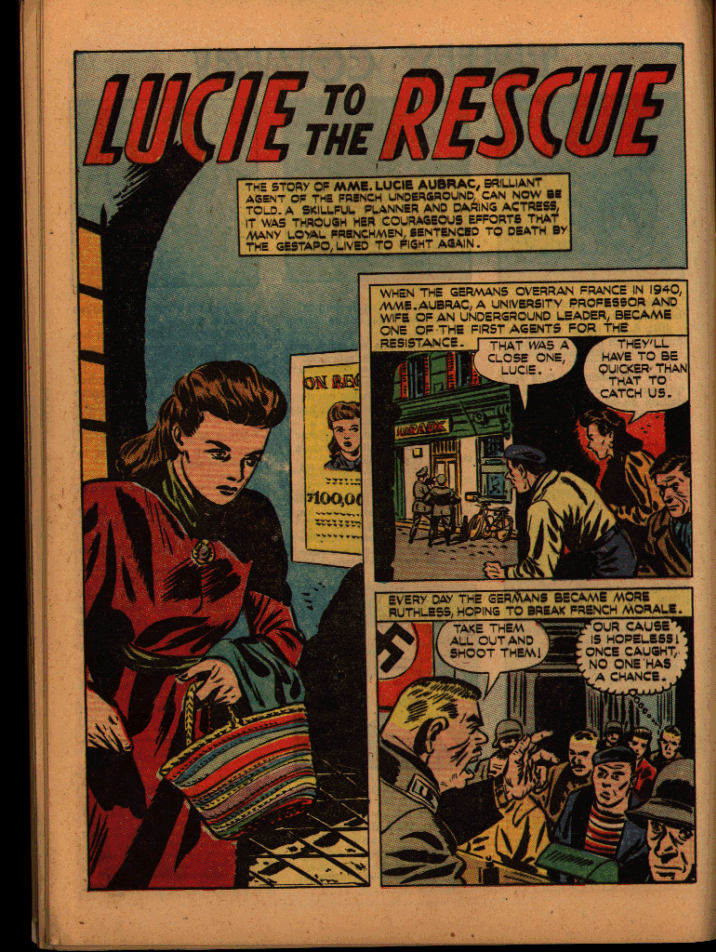
A couple other fun facts about Lucie: She was a history teacher! Shout-out to my other history teachers (and teachers in general) out there. And she was also the first French woman to sit in a French parliamentary assembly. Charles de Gaulle announced that women would (finally) have the right to vote after the liberation of France, and she was able to join as a resistance representative for the consultation assembly. (Crazy to think the women in France didn’t get the right to vote until after the French were liberated in 1944, with their first opportunity to vote in 1945.)
I could write about these inspiring women forever, so I’m going to end this here. But more to come!
 Thinking Thurlowly
Leave a comment