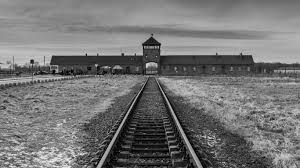
A lot of what I plan to dive into in these posts will be related in some way, shape, or form to the Holocaust and educating others about it. How much does the average American actually know about the Holocaust?
Content warning/ trigger warning: This post contains some graphic images from the Holocaust, and discusses the atrocities committed during the Holocaust.
Based on my experiences in the classroom, not a ton. Sure, kids know the basics to a certain extent, but even in my AP courses, I had students who had never even heard of Hitler before. Those who had knowledge knew Hitler was a generally horrible human being, that Jews were targeted en masse by the Nazis, and that ghettos and concentration/ death camps existed.
Based on a survey done in 2022 by the American Jewish Committee, only slightly over half of those interviewed who were over 18 knew that 6 million Jews were murdered in the Holocaust. The survey asked 4 questions- how many Jewish people were killed in the Holocaust, when the Holocaust occurred, how Hitler came to power, and what Auschwitz was. While these questions seem simple to me, I was saddened (although perhaps not shocked) that only 26% of people got all four questions right, and 30% got three of the four correct.
Out of these four basic concepts of the Holocaust, which barely scratch the surface of really understanding the atrocities of that moment in time, 44% of Americans could only answer two or fewer of those questions correctly.
So in many ways, it is not surprising that we are seeing a rise of anti-Semitism here at home, when we are not ensuring the proper Holocaust education is taking place. As a whole our society has shifted its focus to valuing STEM, and, sadly, the humanities are taking a back seat. It’s no wonder that we are losing a sense of human compassion and understanding, and heading into potentially dark times. (Cue the thunder and sense of foreboding, made worse by my own anxiety.)
My goal with this post is to provide a surface-level overview of the Holocaust, to help orient anyone who may have somehow stumbled into my blog and needs some quick (well, it’s me, so maybe not-so-quick) background before diving into some of the deeper ideas.
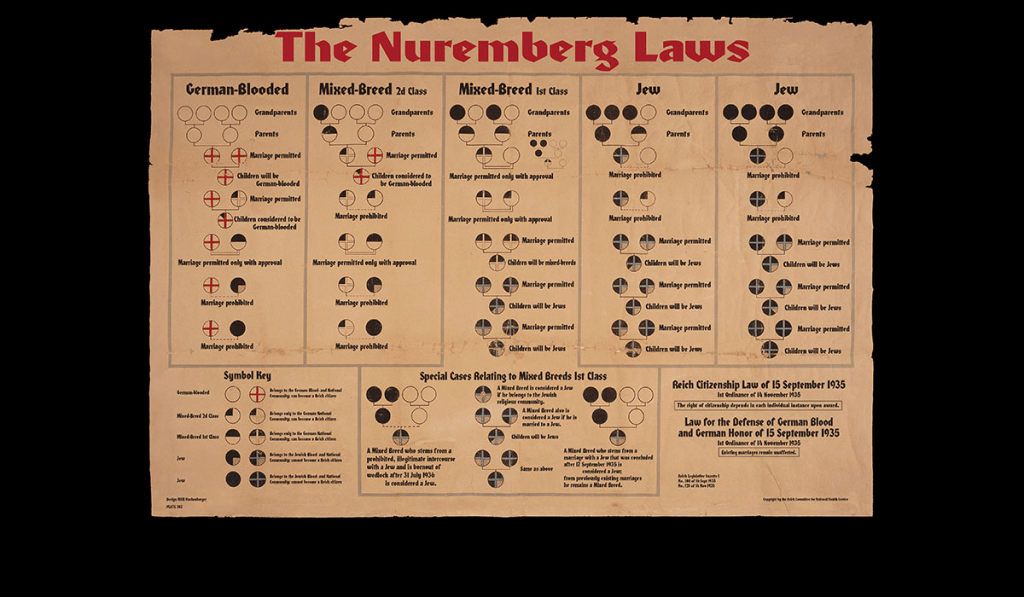
The Holocaust did not simply start overnight- it developed over time, starting with massive anti-Semitism that was prominent for centuries in Germany and beyond. When the Nazis took control in Germany, they used that anti-Semitism as part of their campaign, and the laws they implemented (such as the Nuremberg Laws which significantly reduced the civil rights of the German Jews) slowly but surely eroded the freedoms that Jewish people had.
However, it was not the plan from the beginning to mass murder European Jews. (Or if it was, it was not something that was public knowledge, as this was something that would have definitely met some pushback.) Initially, the idea was for the forced relocation of the Jewish population outside of Germany and the territories conquered by the Nazis (which, let’s be real, were imperialists.) In fact, for a brief moment in time the Nazis wanted to send all the Jewish people to Madagascar. But this was quickly determined to not be a feasible plan.
What we think of as the Holocaust now (a term not used until the 1950s, deprived from Greek meaning “sacrifice by fire”) was the murder of 6 million Jewish people. It also involves other victims that were viewed as “inferior” and “subhuman” by the Nazis: homosexuals, Jehovah’s Witnesses, Poles, Slavic peoples, Roma, people with disabilities, those of African descent, anyone who opposed the regime, social outsiders (“asocials”), and Soviet POWs. Millions of non-Jewish people were also targeted and murdered by the Nazis.
The first concentration camps used by the Nazis were used to house political prisoners. Dachau, located near Munich, was the first Nazi concentration camp and was built in March 1933. (I visited Dachau when I was 17 years old, and I think this was the moment my interest in the Holocaust and preserving the stories of those who perished began. If you have ever been to one of the Nazi camps, you know what I’m talking about- there is just an overwhelming sense of despair that hangs over everything. It’s suffocating.) Jewish prisoners in this camp were minimal until 1938, after Kristallnacht and other instances of increased persecution of the Jews, when numbers rose. Then, as the Jewish population began to be relocated to ghettos and death camps in the east, Jewish numbers in this camp dropped again.
As the Nazis expanded their empire, especially in the east, they were obsessed with lebensraum (meaning “living space”) for the German people. They forcibly relocated massive numbers of people living in eastern Europe to make room for the movement of ethnically German peoples. They created ghettos, essentially enclosed parts of cities or towns, where the Jewish population was forced to live. Oftentimes, these were a stop before these individuals were deported to concentration and death camps further east.
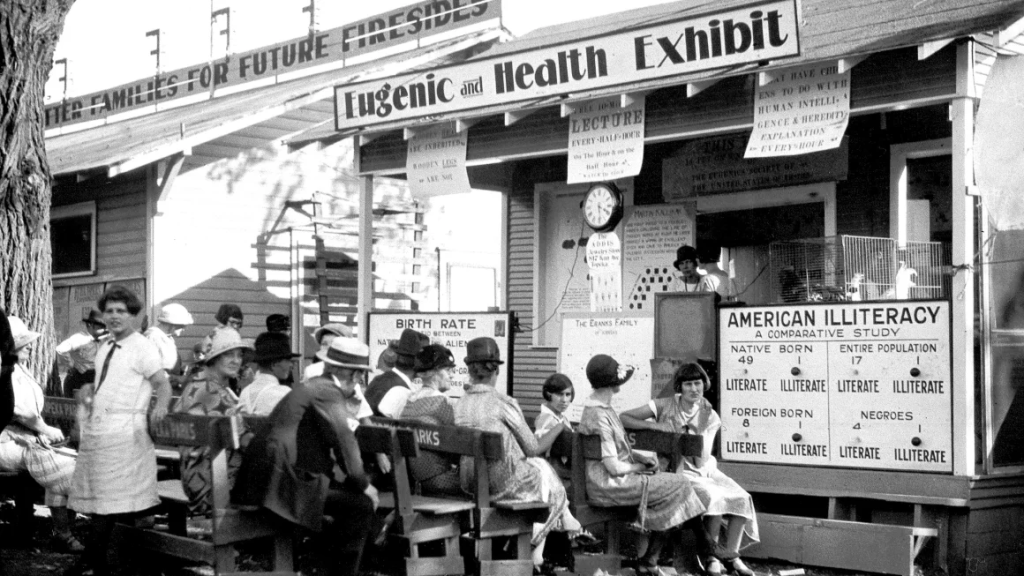
Before the Jews were targeted for murder, some of the first victims of the Nazis were actually German people. Starting in 1939, the Nazis started to secretly “euthanize” German children who had disabilities. Why? The Nazis were obsessed with creating the perfect German race. (Eugenics, the “science” of improving population by breeding out any qualities deemed to be undesirable. This was a huge part of Nazi ideology, but it did not start with the Nazis nor was it localized to this regime. The idea began in England in the late 19th century, and spread to places like the US, where it was particularly popular. Quick sidetrack here- in the US, over 80,000 people were forcibly sterilized to prevent “undesirable” people from having children in the early 20th century. German eugenicists studied and observed American eugenics practices. Hitler’s book, Mein Kampf, explicitly references numerous American eugenicists and their ideas. Maybe I’ll research this more and do a later blog post about it.)
Anyways, the intiial focus was on small children aged three and under, who would be sent to special pediatric “clinics” which acted as fronts for killing centers. The medical staff at these locations would utilize overdoses of medication or starvation to kill these young victims. Eventually, the age group of children expanded to include those up to 17 years of age who were murdered. This expanded even further by early 1940, when it targeted adults living in institutions. Hitler made sure that there was a law passed to exempt all medical staff involved in this euthanasia program, which was called Aktion T4 to keep it secret, from any type of punishments.
The murder of people with disabilities in Germany set the stage for the mass killings committed in death camps in later years. They were the first victims of the gas chambers at the facilities that they were sent to, where the chambers were set up to look like showers. The Nazis used pure carbon monoxide gas in these chambers, and then burned the bodies in the crematoria attached to the gas chambers. (Sound familiar? It should.) Families of these people received an urn with the ashes of their loved ones, as well as their death certificate and other documentation of a falsified cause of death.
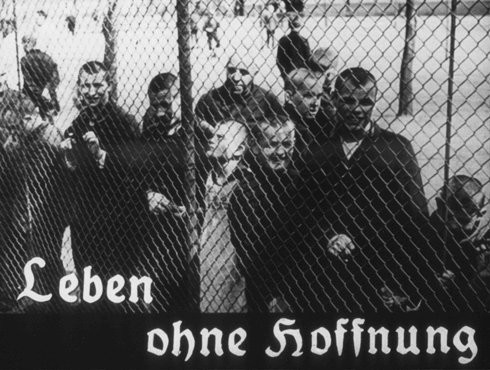
As you can imagine, once this information got out to the public, the people were big mad. After all, these were German people! They were not expecting to be targeted and losing their loved ones. And thus, Hitler gave in to public unrest and protests and put a stop to the T-4 program in August 1941. (Well, at least on paper. The Nazis definitely still continued to kill those with disabilities, just in different, more discreet ways.) Between the beginning of this program in January 1940 and it’s culmination in August 1941, Nazi documentation of the six killing centers estimate that 70,273 individuals with mental and physical disabilities were murdered. And now, the Nazis had the beginning of a methodical system to perfect and use for murder.
The “Final Solution”, the mass murder of the Jewish people, was not established until 1941. After the German invasion of the Soviet Union (Hitler totally stabbed Stalin in the back, as the two had formed a non-aggression pact a few years prior) massive killing operations aimed at Jewish communities began. (Of course, this was not the first time that the Jewish people were murdered under the Nazi regime; rather, this marks the beginning of the highly methodical, industrialized system of killings that the Nazis used.)
Although by this point concentration camps were definitely functioning and prevalent, they were not created as death camps and killing centers yet. The first steps of this “final solution” involved mobile killing squads, who went through invaded territories, rounded up, and murdered massive numbers of individuals. Oftentimes, these killing squads participated in mass firing squad murders, forcing their victims to dig their own mass graves before executing them.
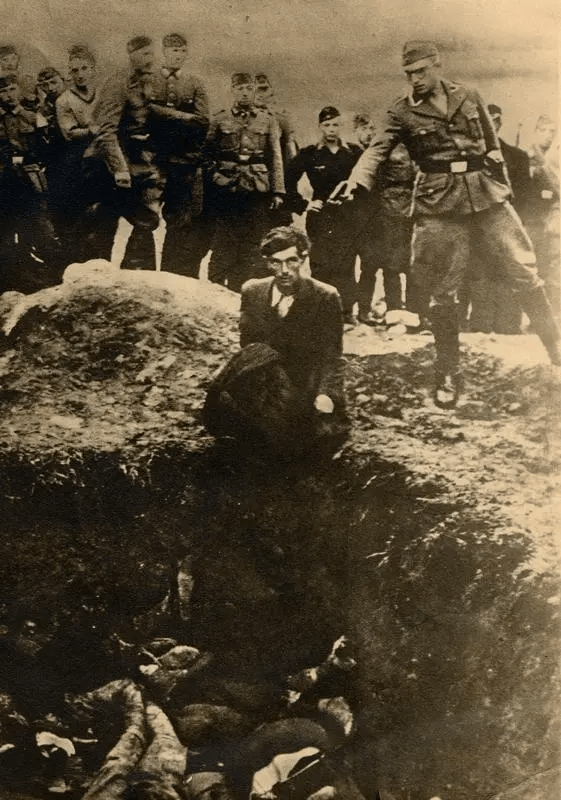
If you’re ever looking for an interesting read about the Holocaust, a great piece of scholarship is Ordinary Men by Christopher Browning. It follows one of the reserve police battalion units and their complicity in murders in Poland. Essentially, Browning looks at the documentation on this one unit to determine how ordinary people could become complicit in such horrendous crimes. He found that out of the group of nearly 500, only about a dozen decided to step forward to excuse themselves from the mass shootings that they were being tasked with after their higher-ranking officer gave them the option to not participate without being punished. Only 12. That’s crazy to me! I can’t even begin to imagine having to do such a horrible task, let alone choosing to continue with it after being given the opportunity to not do so. Browning concludes that a majority of factors went into how these ordinary men became killers; perhaps the most prominent cause was a sense of peer pressure- these men didn’t want to burden their peers with doing more of the work, or seeming like they weren’t manly enough to handle the task. Say no to peer pressure friends and toxic masculinity friends!
Alright, so mobile killing units roamed the east and killed TONS of people. The Einsatzgruppen were the official mobile killing units of the SD (part of the SS), but they were not the only ones committing these atrocities. They were helped by police units (like the men Browning researched), the Waffen-SS, the military, and even local collaborators. In one of the most horrific examples of these mobile killings, 33,771 Jews were murdered by mass shootings in Babi Yar, right outside of Kiev, in September 1941.

These mobile killing units had to deal with a lot of stress. Most of the men suffered (I hate to use that term, since they were the perpetrators here, and literally committed mass murder) from the horrors of murdering their fellow man (and woman.) Alcohol was usually made readily available to those who were committing the killings, with vodka and/or schnapps being the most readily available at the killing sites. So we have these terrible men, doing terrible things, and having to be drunk to do them.
As these groups became more costly and the efficiency of them began to be questioned, as well as the psychological toll on the perpetrators began to raise concern, another piece of the puzzle came together when the Nazis started using vans as transportation to the killing sites. However, these vans were not merely for transport- they were built with sealed in passenger compartments, into which Jewish people were packed tightly and gassed with carbon monoxide. They all died on the way to the killing sites, and would be driven to a mass grave. But this was still not seen as an efficient enough system for the Nazis, as the members of the killing squads had to move the bodies and clean the van compartments. It is estimated that around 1.5 -2 million victims perished from mass shootings and van transportations in Soviet territory. But the Nazis wanted something easier and faster, and so they figured out their next steps: the death camps.
Totally random but related side rant- did you know that the camps built for the mass murder of millions by the Nazis were insured?? How crazy is it that companies actually insured killing factories?
The first death camp was Chelmno, which opened in December 1941. The camp used mobile gassing vans to systematically murder Jews and Roma. In 1942, Belzec, Treblinka, and Sobibor opened, where the Nazis used their ideas for the gas chambers and crematoria that they used in the T-4 program and put them in action. When Auschwitz opened, they started using a pesticide called Zyklon-B after experimenting with it on 600 Soviet POWs. It was essentially an odorless gas that caused suffocation and an agonizing death to those who inhaled it.
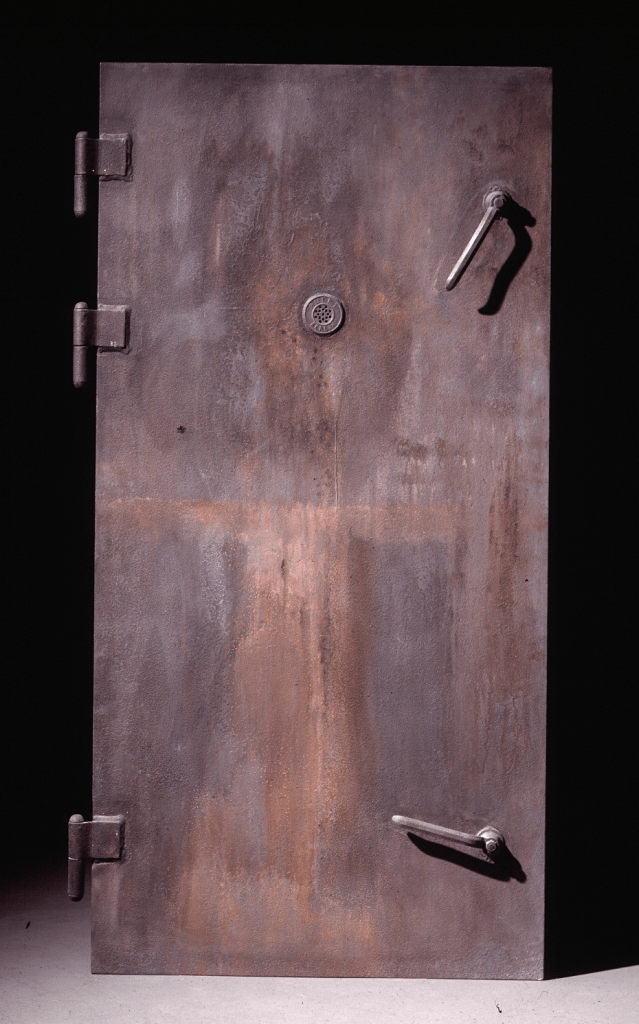
Crazy thing, doors to the gas chambers tended to have peepholes in them so that the Nazis could observe the killing process. (See image above for an example.)
When people arrived to the camps on trains, they underwent the “selection” process, where some were chosen to stay alive and work, while a vast majority were sent directly to the gas chambers. As soon as they got off the train, families were separated into two lines- one for men and older boys, and another for women and children. From those lines, camp doctors and others involved in the running of the camp made the selections from brief interactions with the victims. Often, decisions were made based on age (generally children under 16 were supposed to be sent to the gas chambers as well as the elderly) but illness, pregnancy, and other factors could also lead to being selected for death. It is estimated that only about 20% of those who arrived in the camps were selected for labor, and being chosen for labor was by no means a guarantee of survival.
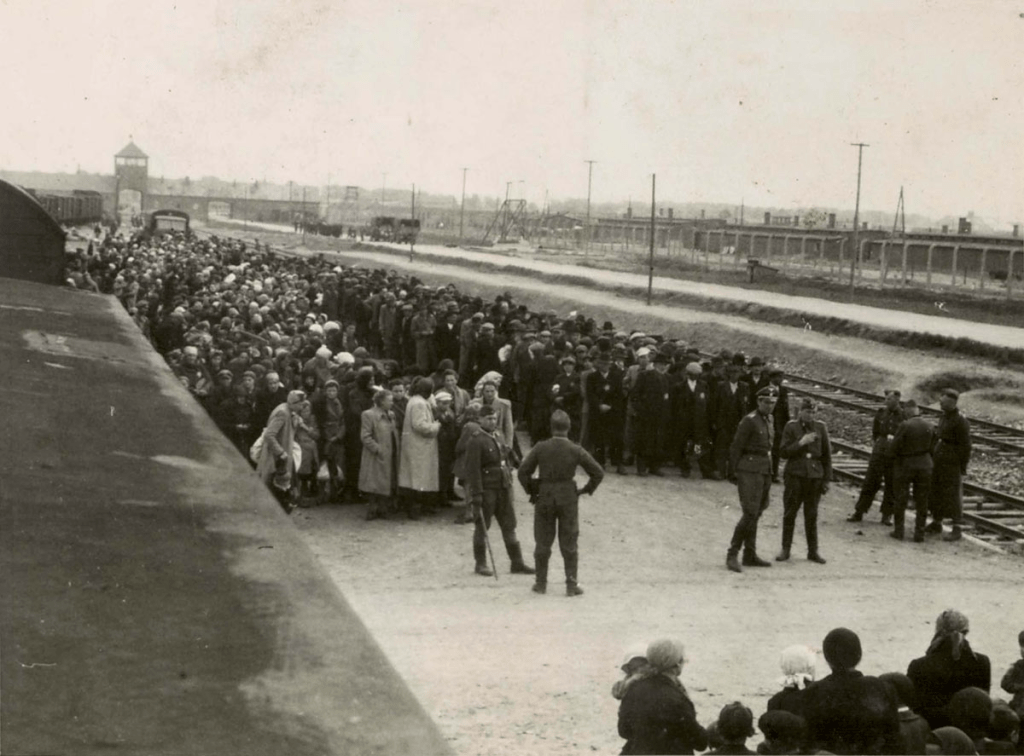
During the peak times of deportations and killings, Auschwitz alone was responsible for the deaths of approximately 6,000 Jews per day who died in the gas chambers. In total, it is estimated that 2.7 million Jews died in killing centers alone. Murders escalated as the Nazis realized they were losing the war, and decided to speed up the process.
As the Soviets and Americans began to approach the camps with liberation goals, the Nazis tried to destroy evidence of their crimes, even literally destroying parts of the camps (in particular the gas chambers or crematoria.)
The world just celebrated the 80th anniversary of the liberation of Auschwitz by the Soviets on January 27. It’s difficult to come to terms with just how close to the present this event was. Let’s ensure that the stories of those who endured these horrors are not forgotten.
 Thinking Thurlowly
Leave a comment